Telecom


Lanthan supplies obstruction lighting for radio towers and mobile phone masts – from new installations and the retrofitting of existing systems to ongoing monitoring. Whether for a single site or a Europe-wide portfolio: our systems are tailored to the operations of tower and network operators and cover all mandatory marking requirements, both nationally and internationally.
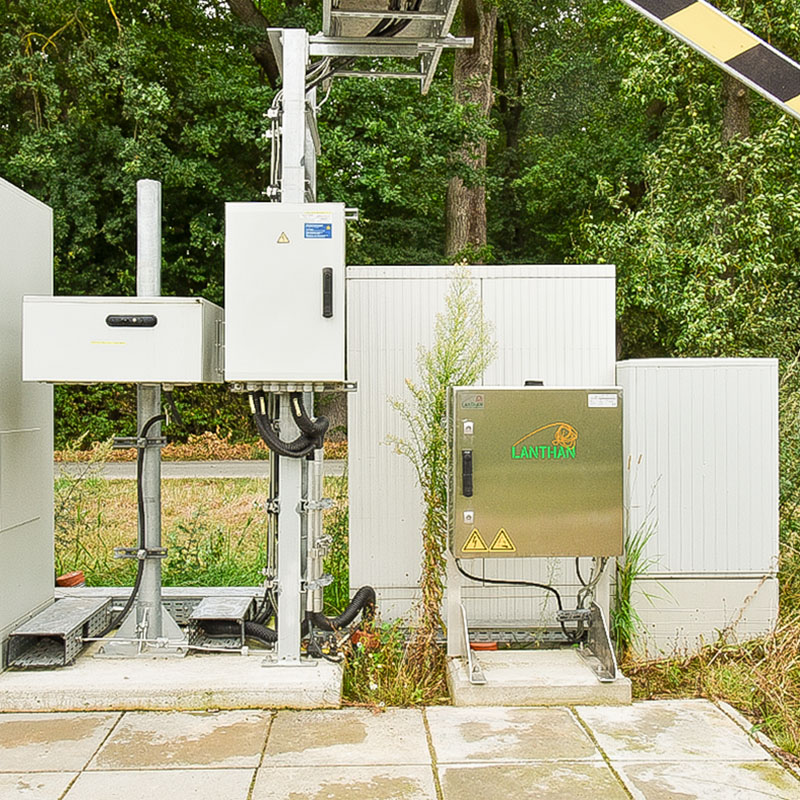
Lanthan systems are designed for lattice masts, steel tubular masts, concrete towers and all common mast types, and comply with the signage regulations of various countries. This means that even international site portfolios can be covered by a single supplier.
The operational status of each site can be viewed centrally via a monitoring portal. A Customer API allows the monitoring to be integrated directly into your own systems – for automated analysis, alerting and reporting without the need for manual reconciliation.
In addition to our own platform, the beacon monitoring system can also be integrated into existing monitoring systems operated by tower providers and network operators – eliminating the need for an additional tool in day-to-day operations.
In the event of beacon failures, Lanthan handles the automated NOTAM reporting to the relevant aviation authorities. This reduces the administrative burden and ensures that reporting deadlines are reliably met.
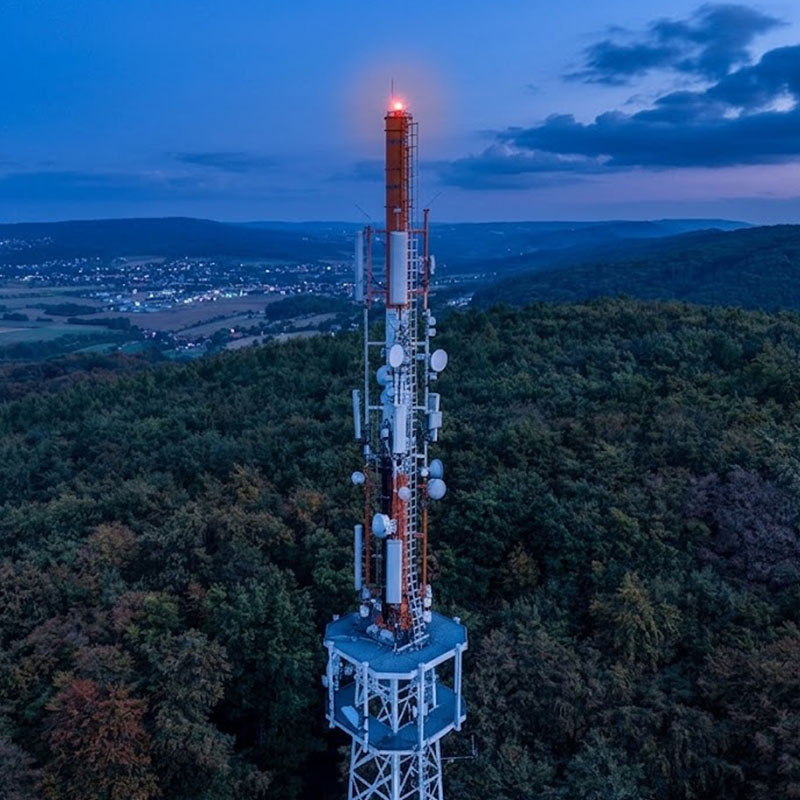
Existing lighting systems can be upgraded to current standards without major structural work – even for masts that have been in operation for decades.
Even without a complete system replacement, existing beacon systems can be retrofitted with monitoring capabilities – providing a centralised status overview even for older installations.
All components are designed for continuous outdoor use and are built to withstand the climatic conditions of exposed mast locations.
An optional UPS bridges the gap during mains power failures and keeps the beacons operating safely even during power cuts – particularly relevant for locations with limited or unstable mains connections.
For sites located near residential areas, demand-controlled night-time lighting (BNK/ADLS) is available as an option. The lighting system is then activated only when an aircraft is actually approaching, thereby reducing light pollution for local residents.